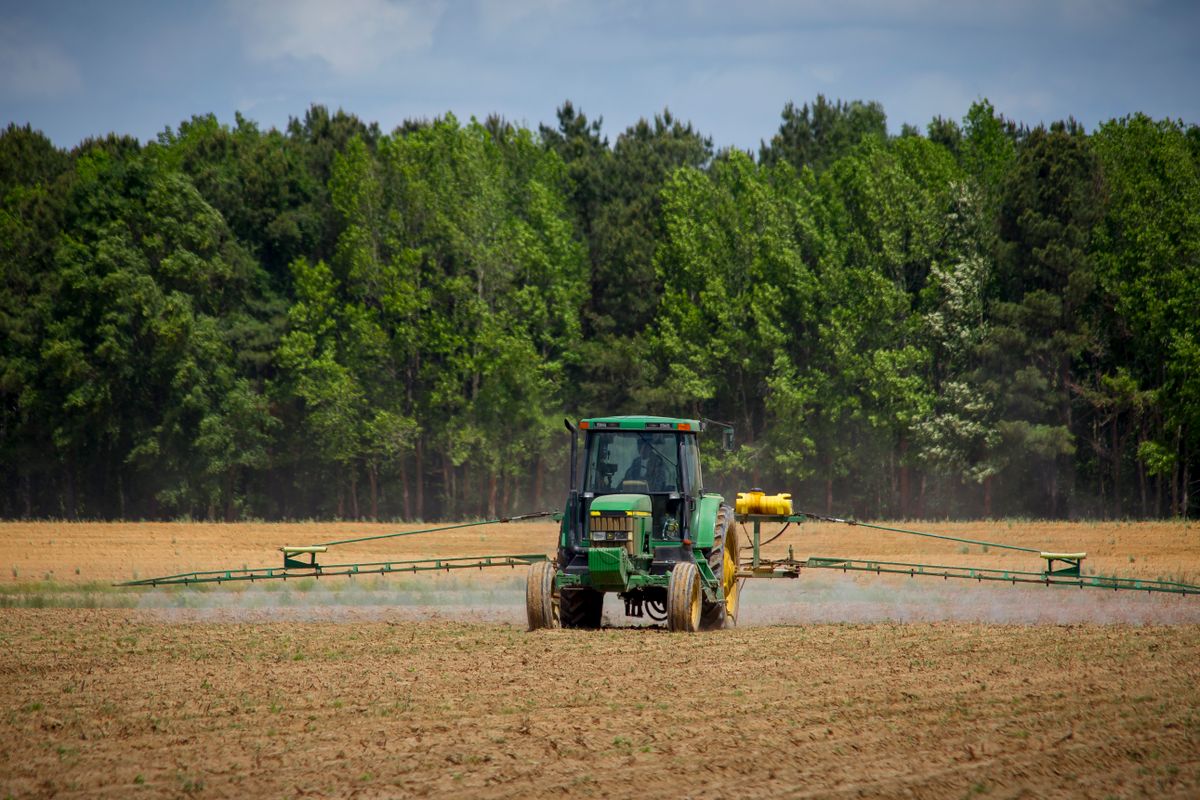
Project RoundUp Not Ready: Boundary Runoff Audit
Original Mission created by RENSIC.
Submit Your Research MissionMission Overview: Soil Health & Agricultural Runoff
American agricultural soil is dying from the inside out. The chemical story has been told in fragments. Nobody has told the complete biological story with forensic grade documentation.
We're changing that starting now.
This pilot deploys in SE Wisconsin public forest adjacent to agricultural runoff channels — where contamination concentrates and biological collapse is most measurable.
The Goal: We aim to build a comprehensive, verifiable database of mycorrhizal and bacterial health in public soils adjacent to major agricultural operations. By analyzing these samples, we can pinpoint areas suffering from severe ecological degradation due to chemical runoff.
The Science: Soil health is heavily dependent on complex fungal (mycorrhizal) and bacterial networks. We are collecting physical soil samples, which will be sent to specialized laboratories—SimpleLab for chemical analysis and Ward Laboratories for biological and fungal analysis.
What makes this valuable and different:
Most soil studies are institutionally funded, geographically limited, biologically incomplete, or forensically inadmissible. We solve all four simultaneously and add the "farm adjacent to forest" testing when current testing is based on farm fields alone.
We test for what others don't:
Dual panel — glyphosate and heavy metals plus full biological health including mycorrhizal networks and bacterial community structure. Chemistry tells you what's there. Biology tells you what's been destroyed.
We document uniquely on Arweave's 200 year archive:
Full chain of custody. Citizen collected. Forensic grade. Results published immutably to Arweave. No institution controls this data. No funder can bury it.
Mandatory Tools & Equipment
To participate in this Mission, you will need the following apps and physical equipment to ensure the chain of custody and data integrity:
ProofMode
A lightweight app that turns your phone into a secure evidence-gathering device by automatically adding cryptographic signatures and metadata to your photos of the collection site.
proofmode.orgPhyphox
An open-source physics application that utilizes your smartphone's sensors. We use it to record environmental telemetry (barometric pressure, precise GPS, and accelerometer data) during collection to cryptographically prove the sample's location and static state.
phyphox.orgNFC Tools
A highly trusted app (10M+ downloads) used to read and write data to NFC tags. You will use this to encode the collection metadata onto the NFC 213 stickers.
Physical Equipment Required:
- Collection Jars: Clean, sterile glass or high-grade plastic soil collection jars.
- NFC 213 Stickers: NTAG213 stickers to affix to the jars for digital chain of custody tracking.
The Collection Methodology
Directive FFR-01: Standardized Soil Sampling & NFC Tagging
To ensure our data is scientifically valid and can be used to hold polluters accountable, all soil samples must be collected following strict standardized procedures. We rely on the NIST Standard Guide for the Collection of Soils.
Phase 1: Soil Collection & Documentation
Identify a collection site adjacent to a major agricultural field, specifically in areas where water runoff naturally pools or flows.
Critical Collection Requirements
- Follow NIST Standards: You must collect the sample according to the official NIST guidelines. Download the guide below and follow the procedures carefully to avoid cross-contamination.
-
Photo Evidence: Use ProofMode to take a photo of the collection site before, during, and after sampling. This embeds cryptographic proof of the time and location.
Required Setting: Ensure "Include Location", "Include Network Data", and "Sign with PGP" are enabled in the app settings. -
Environmental Telemetry: Run Phyphox (Location and Accelerometer) during the 5-minute collection window. This proves the sample was collected at a static location and provides micro-climate data for court-legal documentation.
Required Setting: Select "Location (GPS)" and "Acceleration without g". Set recording rate to at least 1Hz and export as CSV. -
NFC Tagging: Affix an NFC 213 sticker to the collection jar. Open the NFC Tools app and write the unique Mission ID, your Researcher ID, and the GPS coordinates to the tag.
Required Setting: Set the tag to "Read-Only" (locked) after writing to prevent tampering and preserve the chain of custody.
Phase 2: Laboratory Dispatch
Once collected and tagged, the samples must be securely packaged and shipped to our partner laboratories for rigorous testing.
- Chemical & Glyphosate Analysis: Samples will be sent to SimpleLab (Berkeley) to test for the presence and concentration of synthetic fertilizers, general pesticides, and highly sensitive, specialized glyphosate and AMPA residue testing.
- Biological Analysis: Duplicate samples will be sent to Ward Laboratories to assess the bio and fungal health, specifically looking at mycorrhizal network density and bacterial diversity.
Phase 3: Arweave Documentation
Upon receiving the lab results, all data—including the original ProofMode photos, NFC metadata, and the official laboratory reports—will be permanently uploaded to Arweave. This ensures the data cannot be altered, deleted, or suppressed by corporate interests.
Milestones
This mission is structured in three progressive milestones to ensure systematic collection and thorough laboratory analysis.
Milestone 1: Initial Soil Collection & Testing
$5,000Goal: Gather the first batch of physical evidence from runoff zones and conduct baseline lab tests.
- Reward Citizen Researchers for completing 20 standardized soil collection tasks ($5 per task).
- Fund chemical, biological, and glyphosate testing at SimpleLab and Ward Laboratories.
- Upload the initial dataset to Arweave.
Milestone 2: Regional Expansion & Longitudinal Study
$15,000Goal: Expand the testing radius and monitor changes over a full growing season.
- Fund 150 additional collection tasks across a wider geographic area.
- Perform follow-up testing after heavy rainfall events to measure acute runoff spikes.
Milestone 3: Legal Synthesis & Expert Testimony
$45,000Goal: Transform the raw Arweave data into actionable legal complaints against major polluters.
- Hire environmental scientists to synthesize the data into formal, court-ready reports.
- Retain legal counsel to file injunctions and complaints with the EPA and local authorities.
For additional operational resources, consult the Tools and Testing, Ethical Testing Guide, Verification Guide, and Smart Contracts pages.
Standard Operating Procedure (SOP)
Follow this step-by-step checklist to ensure your soil and water samples are forensically valid and free from cross-contamination.
1 Preparation & Equipment
- Containers: Use only new, sterile, glass mason jars or provided sample bags. Do NOT use previously used food containers or plastic bags. You will need two containers per site (duplicate samples).
- Gloves: You MUST wear new, disposable nitrile gloves. Put them on immediately before collecting the sample.
- Tools: Use a clean stainless steel trowel or spoon. Clean it with isopropyl alcohol and let it dry completely before arriving at the site.
- Tech: Ensure your smartphone is fully charged with ProofMode and Phyphox installed and active. Have your NFC 213 stickers ready.
2 On-Site Collection
- Location Verification: Open ProofMode and take a wide-angle photo of the collection site to establish the GPS coordinates and timestamp.
- Telemetry Recording: Start Phyphox (Location and Accelerometer) before sampling and let it run for the entire 5-minute collection window.
- Gloving Up: Put on your new nitrile gloves. Do not touch your face, phone, or clothing once gloves are on.
- Sampling: Dig 3-6 inches deep using your sterile trowel. Collect approximately 4 cups of soil (enough for two duplicate samples).
- Packaging: Divide the soil evenly into two sterile jars or bags. Seal them immediately.
- Avoid Contamination: Do not smoke, eat, or drink near the sample. Do not let the sample touch your skin or clothing.
3 Tagging & Documentation
- NFC Tagging: Affix an NFC 213 sticker to each sealed container.
- Writing Data: Use NFC Tools to write the current date, time, and your Agent ID to the tags.
- Final Photo: Take a photo of both sealed, tagged containers at the collection site using ProofMode.
4 Shipping & Submission
- Storage: Keep the samples in a cool, dark place (like a cooler) until shipping. Do not freeze.
- Lab Forms: Fill out both the SimpleLab and Ward Lab submission forms completely. Include your Agent ID on both.
- Shipping: Ship one sample to SimpleLab and the duplicate to Ward Laboratories within 48 hours of collection.
- Upload: Upload the ProofMode metadata zip file, the Phyphox telemetry CSV, and both tracking numbers to the RENSIC portal.
Standard Assets & Guidelines
The following files are pre-configured specifically for this Mission. Citizen Researchers can use these templates to document findings or report data.
Submission Requirements
Citizen Researchers are required to submit these two files (completely filled out; the .json is pre-filled with Mission-specific metadata) alongside the evidence files for full review, validation, and payment.
Mission Budget Breakdown
Total Funding: $5,000 (Fully Funded)
The majority of funding goes directly to SimpleLab (Chemical Analysis) and Ward Laboratories (Bio and Fungal) for rigorous scientific testing of the 20 samples.
Standard 10% fee for platform maintenance, Arweave pinning, and administrative overhead.
Mission Timeline
Mission Created
Project RoundUp Not Ready initialized. Initial funding round opened.
Soil Sample Collection
Users collect soil samples, document with ProofMode, and tag with NFC 213 stickers.
Laboratory Analysis & Arweave Documentation
Samples analyzed by A&L Great Lakes and Ward Laboratories. Results permanently stored on Arweave.
Activity Log
Mission started. Awaiting first submissions.
Audit Results
Results will be populated as verified data is collected and lab reports are returned.
Funded:
Private Data - Collection in Place
Minimum contribution: $10.00
This mission is currently in manual funding phase. All contributions are tracked publicly. Full platform automation launching Q3 2026.
NOTE: All transactions are securely processed and tracked for Escrow services.
Milestone 1 is Fully Funded! Any new contributions will be applied directly toward the next Milestone.